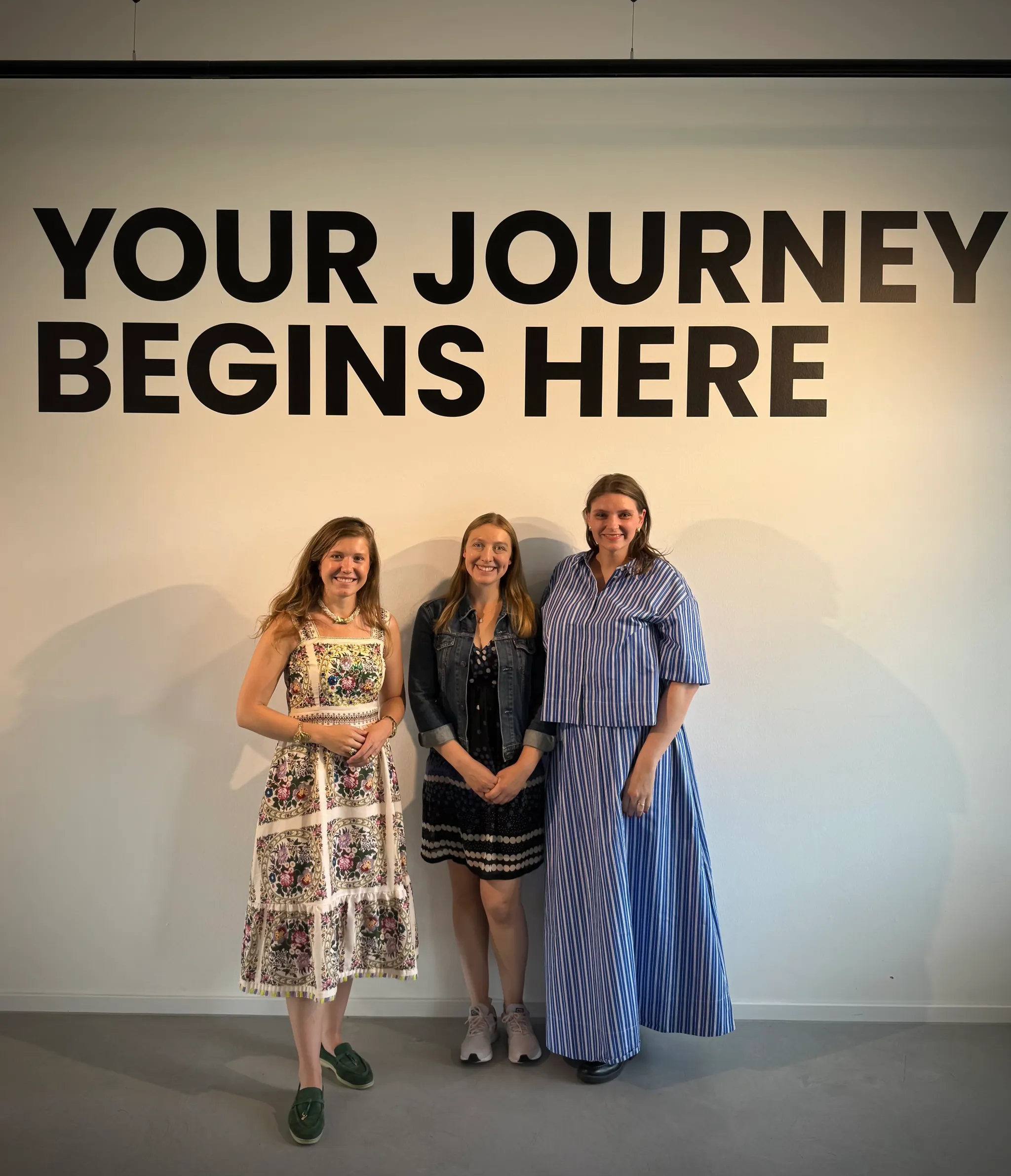
When Sarah Güsken describes her day-to-day work, one thing becomes clear: research at Celonis isn’t a side project; it’s a core part of the company’s identity. Celonis was founded in 2011 by three students at the Technical University of Munich. Their idea was to make business processes visible to improve them – a concept that evolved into the global market leader in process mining. That academic origin still shapes Celonis today. What began in a lecture hall has grown into a tech company with over 3,000 employees worldwide. And its academic roots are actively cultivated.
“We believe in the impact of research because we came from it,” says Güsken.
The Celonis Academic Alliance is a clear expression of that. The initiative connects universities, students, and companies around the globe and fosters dialogue between research, teaching, and practice. Today, the network includes 800+ universities worldwide, with 490,000+ students who have already been trained in Celonis software. More than 1,400 professors are active as academic partners, and 250+ research projects are exploring new approaches to process mining and business transformation.
One part of the alliance is focused on education: universities gain access to Celonis software, and students learn early on how process mining and the Celonis software work in practice. “Our customers are desperately looking for young talent who not only know the software but can apply it,” Güsken explains.
The other part of the alliance is focused on research and innovation, which Güsken leads globally. She works closely with academic partners, customers, partners and Celonis employees to jointly develop new ideas, methods, and technologies.
Innovation, Stakeholders, and Global Collaboration
Güsken holds a PhD in innovation management and now brings her scientific curiosity into a dynamic corporate environment. Her work is international, interdisciplinary, and ever-evolving. “I collaborate with researchers, partners, clients, and students from Germany, the U.S. or India. I learn something new every day.”
Her mission: to design research that doesn’t remain locked in the ivory tower but instead generates real impact for both universities and businesses. She designs formats, connects people, identifies research needs and sets things in motion. Her work goes one step further: the results of this research feed directly into the ongoing development of Celonis products – making scientific insights immediately applicable in practice.
One of her key focus areas for 2025: collaborative AI research with practical relevance. The goal is to transfer research outcomes directly into a business context. “We want research that reaches the organization and sparks concrete product development.”
One of the core formats for this is the STaR Program – a platform for student theses that truly make an impact. “We want to empower students and learn with them.”
The STaR Program: Theses That Matter
What does that look like in practice? For example, in the Student Thesis and Research (STaR) Program by Celonis. It targets students around the world who explore Process Mining and Process Intelligence as part of their theses, research projects, seminars, or study projects.
“We have already supported more than 1,500 projects – ranging from bachelor’s and master’s theses to seminar projects.” It’s easy to join: participants receive a comprehensive welcome package with information about the software, access to the Celonis Academy, and practical research tips. Those wanting to go deeper can request additional support, such as expert interviews or extended licenses.
One of Güsken’s key messages: all disciplines are welcome. Not just STEM, but also the social sciences, business, and design. What matters is the topic’s relevance both for the student and for Celonis. “When we support a thesis, it’s because it has real potential to improve our product, our processes, or our understanding of user needs.”
Collaboration with the Celonauts
What makes a great thesis collaboration? “When a thesis leads to a prototype. Or a use case. Or a new product idea. Or maybe even a product itself. And when everyone involved says: This moved us forward.”
There’s no one-size-fits-all path. Some students bring their own topic ideas and request feedback and resources. Others start through project listings or part-time student roles. Güsken helps structure the projects and connects students with the right people: “I’ve never seen someone not get support from us.”
And it works: some students are offered full-time positions either at Celonis or with a partner company. Other projects feed into research or product development. It’s always about eye-level collaboration, shared goals, and mutual trust.
What Makes Collaboration Work?
To keep student theses from ending up in a drawer, Güsken sees three essential factors:
- Initiative from students, faculty, and companies.
- Structures that make collaboration feasible and scalable.
- Mindset to treat student theses as drivers of innovation.
“Sometimes, all it takes is one short conversation to spark a relevant idea.”
Celonis lives by this principle. And Güsken encourages other companies to see research not as a checkbox but as a strategic field of innovation.