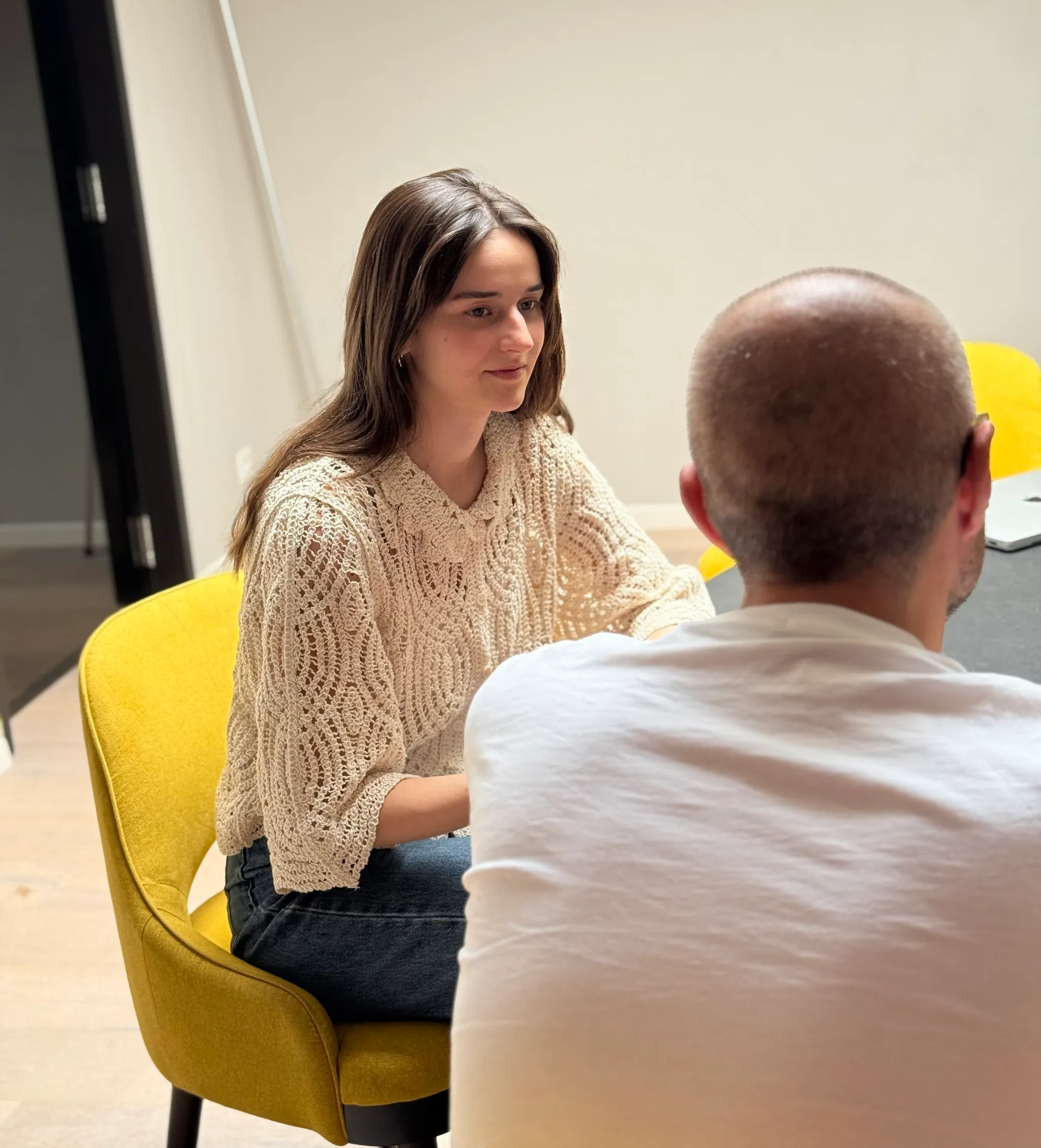
In 2022, the University of St. Gallen launched its Bachelor's program in Computer Science. Alongside it, students initiated the ACM Student Chapter St. Gallen: the first of its kind at HSG and part of the global Association for Computing Machinery network.
“We are the first student-run association for computer science students at HSG.”
The Chapter has three goals: First, to foster student community and peer exchange. Second, to offer learning support, such as exam summaries or practice materials. Third, to build bridges to the professional world through networking events, coding nights, and targeted matching.
The organization is closely integrated with the School of Computer Science. “We have short paths to the faculty. We can just drop by the office,” says Müller. Students are also actively involved in shaping activities: “If someone has a great event idea, we’ll support it – as long as it’s well organized.”
Practice-Oriented Formats that Motivate Students
A central format is the “Coding Night”: In an evening event, students solve real-world problems either for themselves or in collaboration with companies. “Time pressure and team spirit create an atmosphere where you just dive in.”
For the upcoming fall semester, the first company collaboration is planned. Bachelor’s theses with a practical angle are also a great opportunity, if conditions are right. These collaborations are still rare, Müller notes. One concern: “You end up stuck between two chairs: between company and university, with no clear accountability on either side.”
The need for clearer processes is also apparent from the business side: “When companies come with a clear topic, it makes it much easier for us students to get started.”
Not all of the Chapter’s contributions can be listed. Some emerge naturally, bottom-up, as Müller puts it: “Things like case studies or coding sessions often evolve through one-on-one conversations.”
What really matters, she says, is the mindset: open, flexible, and solution-oriented.

Final Thesis in the Age of AI
As a computer science student, Müller not only used AI but also studied it. Her Bachelor’s thesis investigated the placebo effect in supposedly AI-powered user interfaces. The surprising finding: just believing you’re working with AI can positively influence your experience, even when there’s no real AI effect at all.
But it’s not just behavior that’s changing. Final theses themselves are evolving. Many traditional tasks, like literature reviews or outlining, can now be partially automated. That saves time but raises new questions: What still counts as original work? Where does external assistance begin?
“In the past, research was essential. Today, you can summarize ten papers instantly.”
This leads to uncertainty for many students: What kind of AI use is allowed? How transparent do prompt logs need to be? And: Will my thesis still be read by a human? Or summarized by an algorithm?
“You ask yourself: Will a person still read my work? Or is it already being digested by AI?”
Especially in these gray areas, communication is key. What AI can do is impressive, but what matters is how we handle it together. For Müller, one thing is certain: technology does not replace good mentorship. “The advisor makes up 50% of the thesis experience. Trust, feedback, dialogue – that’s irreplaceable.”
Confidence in the assessment process is equally important. Müller recalls one specific concern: “If I write a chapter myself and it gets flagged as ‘100% AI-generated’: that would really suck.”
For her, AI is a tool not a substitute for critical thinking, personal effort, and human exchange. And to keep it that way, clear rules and mutual openness are needed.
What’s next? Müller's original plan to write her thesis at Porsche fell through due to the effort required: “It felt like I had to satisfy two stakeholders at once.” But for her Master’s thesis, she’s open to collaborating with a company if the topic is specific and the setup clearly defined: “I want to know my work is actually useful.”
