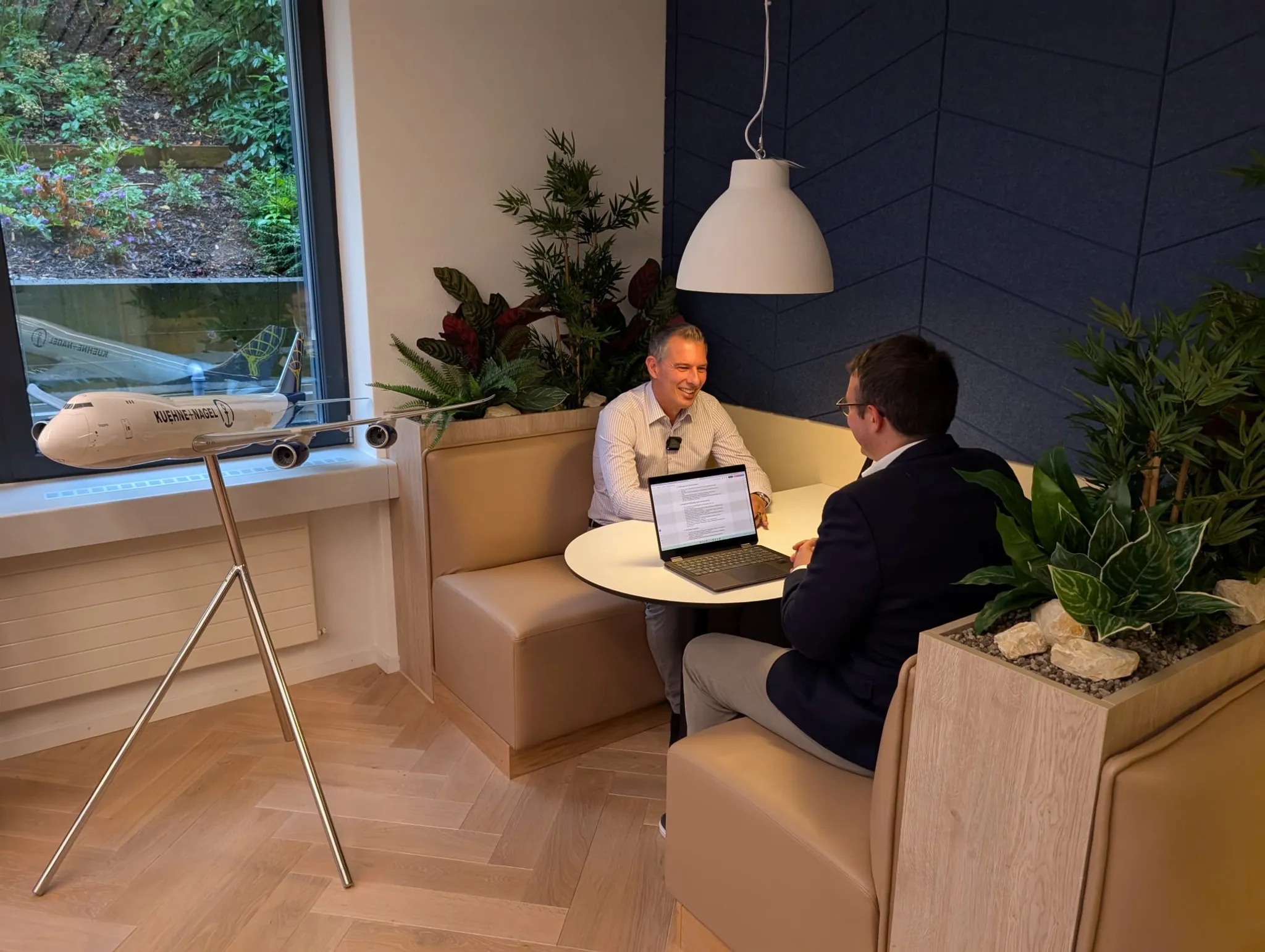
Kuehne+Nagel is one of the world’s leading logistics providers. With around 80,000 employees in over 100 countries, the Swiss company orchestrates complex global supply chains – by sea, air, road, and rail. From automotive to pharma to e-commerce: what moves through this company is as diverse as the people behind it.
Reto Parolini is responsible for identifying and developing emerging talent globally. And when he speaks, it becomes clear: his focus is not on job openings but on people. As Global Head of Talent Acquisition, he accompanies students and graduates at key decision points in their lives, among other responsibilities. “It’s incredibly fulfilling to be able to make a difference in those moments,” he says.
Parolini’s career path – from sports scientist to HR strategist – has shaped him. Whether as a coach, consultant, or leader, Parolini sees talent development as a holistic responsibility. He approaches working with students through three dimensions: securing future skilled workers from a company perspective, providing individual support from a talent development perspective, and fostering mutual inspiration from an age-diversity perspective. “When you work with young people, you see the world through fresh eyes. That keeps me sharp.”
“It’s not just about employing students as a workforce, but about building sustainable relationships with them.“
That’s what drives his work: discovering talent, building trust, and enabling long-term development. And that’s where thesis work comes in – not as a box to check, but as a meaningful starting point.
Logic of Global Logistics & Thesis Work
Why is it worthwhile to write a thesis with Kuehne+Nagel? Because this is where diverse flows of goods, different modes of transport, and modern IT solutions intersect – and ultimately meet the people who manage them in the operational day-to-day reality of logistics. This has consequences: “Our topics are so hands-on, we often need people on site. Remote work is only partially possible.”
For students, that means stepping into real processes, not just studying them. Whether in customs, warehousing, or digital interfaces, thesis students become part of operational teams. The expectations? Flexibility, communication skills, and ownership. “Our world was already very dynamic before Covid, but in recent years it has also become significantly more volatile. Anyone working with us needs to be able to handle change well.”
Kuehne+Nagel also benefits from the exchange. “Students bring in fresh perspectives,” says Parolini. Especially in entrenched processes or complex challenges, this outside-in view can be invaluable. But it only works if the results are actually used: “A successful thesis doesn’t end up in a drawer. It’s brought to the table and taken further.”
It’s a Relationship, Not a Transaction
At Kuehne+Nagel, thesis work is one of several entry points, alongside internships, project work, and trainee programs. All of these formats create space for mutual exploration. “We collaborate before a contract is signed. That builds trust on both sides.”
What makes a thesis project successful? Parolini sees three key criteria:
1. Clear practical relevance: The topics must be relevant to the company.
2. Project ownership: Students should actively shape their role and drive their project consistently toward results.
3. Feasibility: The outcomes should be transferable back into processes.
The second point is especially important in logistics. “Thesis projects are also training grounds for project management. Planning, coordination, communication. These are essential skills far beyond academia.”
Even after the thesis, the door stays open. “If it’s not the right fit right away, we don’t lose sight of the person. With their consent, we keep their profile in our Candidate Relationship Management System (CRM). Oftentimes, another opportunity comes later.”
Looking Ahead: Lifelong Learning in a Changing Industry
For Parolini, a thesis is just one building block. He sees it as a starting point for something deeper: a mindset of lifelong learning. Not in the sense of collecting degrees, but as an ongoing process of self-reflection.
“What do I know, what do I need in the future and how do I close that gap?”
In logistics, that question is becoming more urgent. Technological shifts, sustainability demands, and geopolitical pressures are changing the skills required. “Anyone who wants to stay relevant has to stay flexible and constantly re-adjusting.”
That’s why Kuehne+Nagel focuses not only on recruiting, but also on development. From thesis projects to specialist or leadership careers, the goal is to continually create development opportunities and support employees along the way in order to keep them engaged in the company long term. Because: “Talent consists of people, not assets. Development is about building relationships and fostering potential.”